Academic art

Description

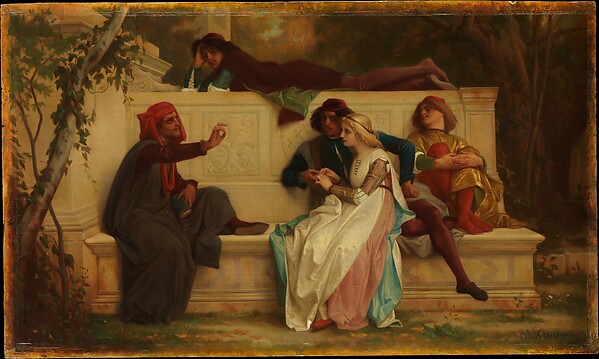
Academic art, academicism, or academism, is a style of painting and sculpture produced under the influence of European academies of art. This method extended its influence throughout the Western world over several centuries, from its origins in Italy in the mid-16th century, until its dissipation in the early 20th century. It reached its apogee in the 19th century, after the end of the Napoleonic Wars in 1815. In this period, the standards of the French Académie des Beaux-Arts were very influential, combining elements of Neoclassicism and Romanticism, with Jean-Auguste-Dominique Ingres a key figure in the formation of the style in painting. The success of the French model led to the founding of countless other art academies in several countries. Later painters who tried to continue the synthesis included William-Adolphe Bouguereau, Thomas Couture, and Hans Makart among many others. Read more ↗

Key Artists

William-Adolphe Bouguereau
The undisputed leader of 19th-century French academic art whose flawless technical execution, mythological grace, and idealized nudes epitomized official Salon taste.
Alexandre Cabanel
Influential professor at the École des Beaux-Arts and favorite painter of Napoleon III, celebrated for smooth, polished mythological masterpieces and grand state portraits.
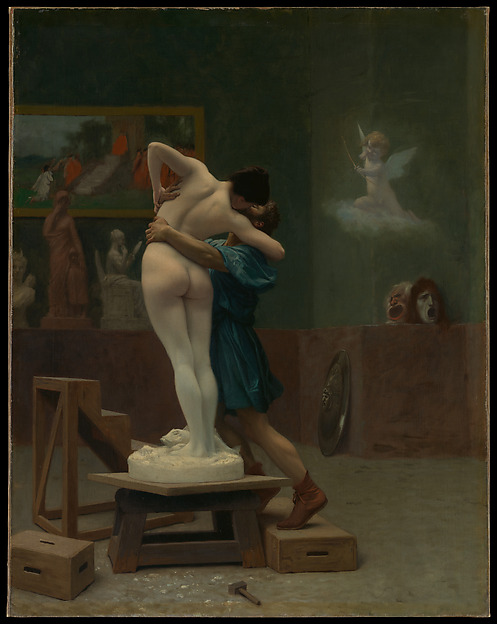
Jean-Léon Gérôme
Formidable academic master and teacher celebrated for meticulous historical reconstructions of Roman gladiator combats and Orientalist scenes.
Thomas Couture
Prominent French history painter and educator whose monumental moralizing canvases bridged classicism with rich Venetian colorism.
Lawrence Alma-Tadema
Dutch-born British academician renowned for archaeological precision and luminous rendering of marble, silk, and Mediterranean sunlight in scenes of daily Roman and Egyptian life.
Jean-Auguste-Dominique Ingres
Foundational pillar of 19th-century French academic orthodoxy who championed supreme primacy of line, classical draughtsmanship, and historical continuity against Romantic turbulence.

Famous Artworks

The Birth of Venus
The Birth of Venus
William-Adolphe Bouguereau · 1879
Musée d'Orsay, Paris - Oil on canvas
Credit: William-Adolphe Bouguereau (Wikimedia Commons)
The Birth of Venus (Phaedra)
Alexandre Cabanel · 1863
Musée d'Orsay, Paris - Oil on canvas
Credit: Metropolitan Museum of Art, New York, NY - Alexandre Cabanel
Pollice Verso (Thumbs Down)
Jean-Léon Gérôme · 1872
Phoenix Art Museum, Arizona - Oil on canvas
Credit: Metropolitan Museum of Art, New York, NY - Jean-Léon Gérôme
Romans During the Decadence
Thomas Couture · 1847
Musée d'Orsay, Paris - Oil on canvas
The Roses of Heliogabalus
Lawrence Alma-Tadema · 1888
Private Collection - Oil on canvas
Credit: Lawrence Alma-Tadema (Wikimedia Commons)
The Apotheosis of Homer
Jean-Auguste-Dominique Ingres · 1827
Musée du Louvre, Paris - Oil on canvas
Credit: Jean-Auguste-Dominique Ingres (Wikimedia Commons)

Fun Facts

To paint the avalanche of rose petals in 'The Roses of Heliogabalus' with absolute botanical accuracy during the gloomy London winter of 1887–1888, Lawrence Alma-Tadema had fresh boxes of roses shipped to his studio weekly from the French Riviera by train.
↗ Source: britannica.com
For over half a century, the annual Paris Salon of the Académie des Beaux-Arts was the most powerful cultural event in the world, attracting over one million visitors each spring and determining whether a French artist achieved fortune or financial ruin.
↗ Source: metmuseum.org

Shop Academic art wall art

Explore more