Description
The chart is an interactive lineage map. American Barbizon school sits at the center, on a timeline that runs from older movements at the top to newer ones at the bottom. The movements that influenced it appear above it, any parallel movements it developed alongside sit on its own row, and the movements it later influenced appear below. Every line is a real, cited connection between two movements: a solid line is an influence historians broadly agree on, and a dashed line is an indirect, parallel, or contested link.
For American Barbizon school (c. 1850 – 1890s), it traces one movement that shaped it, a well-established link: the Barbizon school; it runs alongside two parallel movements, all well-established links: the Hudson River School and Tonalism.
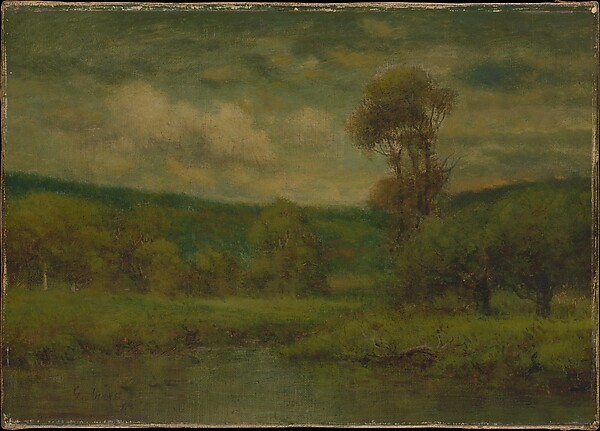
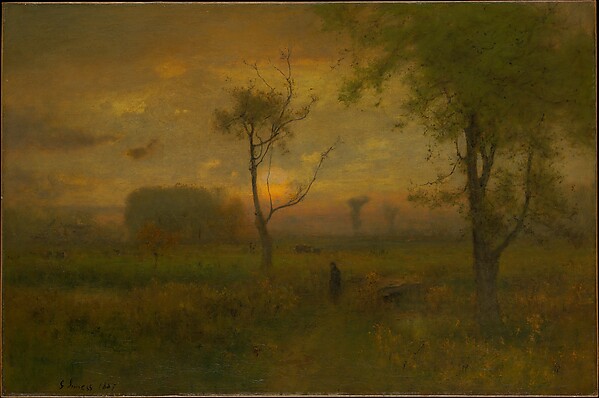
The American Barbizon School was a group of painters and style partly influenced by the French Barbizon school, who were noted for their simple, pastoral scenes painted directly from nature. American Barbizon artists concentrated on painting rural landscapes which often included peasants or farm animals.
William Morris Hunt was the first American to work in the Barbizon style as he directly trained with Jean-François Millet in 1851–1853. When he left France, Hunt established a studio in Boston and worked in the Barbizon manner, bringing the style to the United States of America. Read more ↗