Description
The chart is an interactive lineage map. Ashcan School sits at the center, on a timeline that runs from older movements at the top to newer ones at the bottom. The movements that influenced it appear above it, any parallel movements it developed alongside sit on its own row, and the movements it later influenced appear below. Every line is a real, cited connection between two movements: a solid line is an influence historians broadly agree on, and a dashed line is an indirect, parallel, or contested link.
For Ashcan School (c. 1890s – 1920s), it traces two movements that shaped it, all well-established links: American realism and Realism; it runs alongside one parallel movement, a well-established link: American Scene Painting.
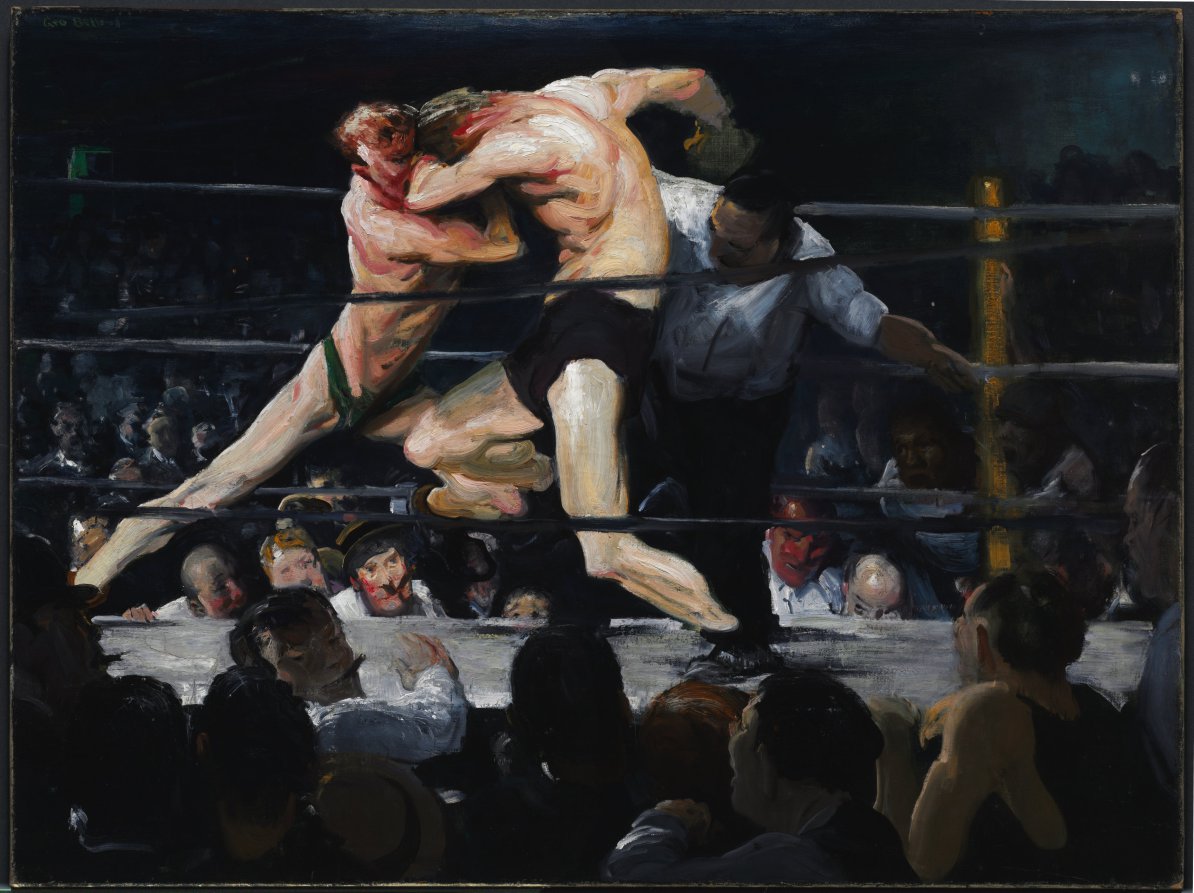
The Ashcan School, also called the Ash Can School, was an artistic movement in the United States during the late 19th-early 20th century that produced works portraying scenes of daily life in New York, often in the city's poorer neighborhoods. The movement, which took some inspiration from Walt Whitman's 1855 epic poem Leaves of Grass, has been seen as emblematic of the spirit of political rebellion of the period. Read more ↗