
Description
The chart is an interactive lineage map. Folk art sits at the center, on a timeline that runs from older movements at the top to newer ones at the bottom. The movements that influenced it appear above it, any parallel movements it developed alongside sit on its own row, and the movements it later influenced appear below. Every line is a real, cited connection between two movements: a solid line is an influence historians broadly agree on, and a dashed line is an indirect, parallel, or contested link.
For Folk art (Traditional – Present), no earlier influence is recorded for it; it runs alongside one parallel movement, an indirect or contested link: Naive art; it fans out to six movements it went on to influence, a mix of well-established and looser, indirect links: Art Brut, Makonde art, Mingei, Neo-primitivism, Rasquache and Tingatinga.
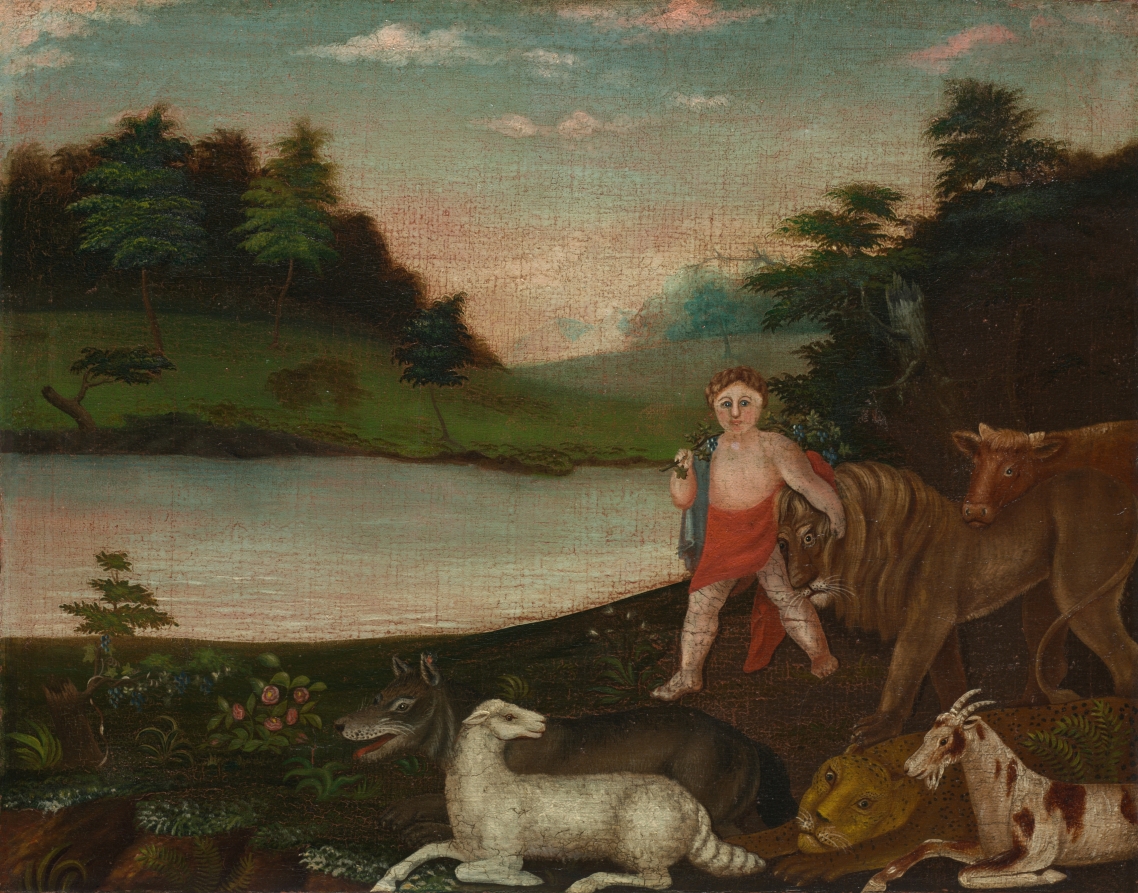
Folk art covers all forms of visual art made in the context of folk culture. Definitions vary, but generally the objects have practical utility of some kind, rather than being exclusively decorative. The makers of folk art are typically trained within a popular tradition, rather than in the fine art tradition of the culture. There is often overlap, or contested ground with "naive art." "Folk art" is not used in regard to traditional societies where ethnographic art continue to be made.
The types of objects covered by the term "folk art" vary. The art form is categorised as "divergent... of cultural production ... comprehended by its usage in Europe, where the term originated, and in the United States, where it developed for the most part along very different lines." Read more ↗
Key Artists
Famous Artworks
.jpg)


_MET_DT2049.jpg)