Harlem Renaissance

Description

The Harlem Renaissance was an intellectual and cultural movement of African-American music, dance, art, fashion, literature, theater, politics, and scholarship centered in Harlem, Manhattan, New York City, spanning the 1920s and 1930s. At the time, it was known as the "New Negro Movement", named after The New Negro, a 1925 anthology edited by philosopher Alain Locke, who is regarded as the "Dean" of the Harlem Renaissance. The movement also included the new African-American cultural expressions across the urban areas in the Northeastern United States and the Midwestern United States affected by a renewed militancy in the general struggle for civil rights, combined with the Great Migration of African-American workers fleeing the racist conditions of the Jim Crow Deep South, as Harlem was the final destination of the largest number of those who migrated north. Read more ↗
Key Artists

Aaron Douglas
Widely known as the 'Father of Black American Art' who pioneered a distinctive geometric, Art Deco-influenced style that synthesized European modernism with African sculpture and jazz rhythms.
Jacob Lawrence
Celebrated painter and storyteller of the Harlem Renaissance whose dynamic 'dynamic cubism' and multi-panel narrative series chronicled African American history and the Great Migration.
Augusta Savage
Pioneering sculptor, educator, and community leader who founded the Savage Studio of Arts and Crafts in Harlem, creating dignified portraits of Black leaders and mentoring younger artists.
Archibald Motley
Renowned painter associated with the movement whose vibrant, illuminated compositions celebrated the nightlife, jazz clubs, and sophisticated urban culture of Bronzeville and Harlem.
James Van Der Zee
The premier photographer of the Harlem Renaissance whose studio portraits documented the elegance, pride, and burgeoning intellectual and cultural life of Harlem's Black community.
William H. Johnson
Expressive painter who evolved from European academic impressionism to a bold, faux-naïve modernist style capturing African American spirituals, folk traditions, and daily life.

Famous Artworks

Aspects of Negro Life: The Song of the Towers
Aaron Douglas · 1934
Schomburg Center for Research in Black Culture, New York Public Library - Oil on canvas mural
The Migration Series (Panels 1–60)
Jacob Lawrence · 1941
Museum of Modern Art (MoMA), New York & The Phillips Collection, Washington, D.C. - Tempera on hardboard
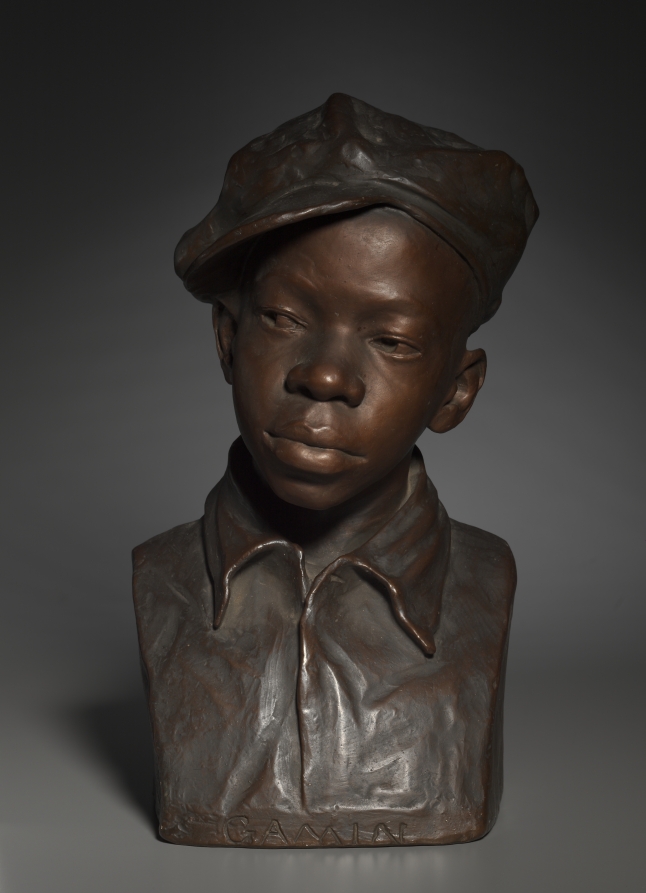
Gamin
Gamin
Augusta Savage · 1929
Smithsonian American Art Museum, Washington, D.C. - Painted plaster sculpture
Credit: Cleveland Museum of Art - Augusta Savage
Nightlife
Archibald Motley · 1943
Art Institute of Chicago - Oil on canvas
Couple in Raccoon Coats
James Van Der Zee · 1932
Metropolitan Museum of Art, New York - Gelatin silver photograph
Street Life, Harlem
William H. Johnson · 1939
Smithsonian American Art Museum, Washington, D.C. - Oil on plywood

Fun Facts

The Harlem Renaissance was originally called the 'New Negro Movement', named after philosopher Alain Locke's landmark 1925 anthology 'The New Negro: An Interpretation', which urged Black artists to reclaim their African heritage and create distinctive, dignified modern art.
↗ Source: metmuseum.org
Jacob Lawrence painted all sixty panels of 'The Migration Series' simultaneously in a single rented studio, moving color by color across every board from yellow to red to black in order to ensure visual consistency and rhythm across the entire narrative sequence.
↗ Source: moma.org

Shop