Japanese art

Description

Japanese art consists of a wide range of art styles and media that includes ancient pottery, sculpture, ink painting and calligraphy on silk and paper, ukiyo-e paintings and woodblock prints, ceramics, origami, bonsai, and more recently manga and anime. It has a long history, ranging from the beginnings of human habitation in Japan, sometime in the 10th millennium BCE, to the present day. Read more ↗

Key Artists

Katsushika Hokusai
Edo-period ukiyo-e master whose dynamic woodblock print series 'Thirty-Six Views of Mount Fuji' became the international symbol of Japanese visual art.
Utagawa Hiroshige
Celebrated ukiyo-e landscape master whose lyrical, atmospheric prints of the Tōkaidō road deeply influenced Western Impressionists and Post-Impressionists.
Sesshū Tōyō
Muromachi-period Zen Buddhist monk and ink-wash painting master who adapted Chinese landscape traditions into a uniquely bold, expressive Japanese aesthetic.
Ogata Kōrin
Edo-period Rinpa master who revolutionized decorative screen painting with bold abstractions of nature, lavish gold leaf, and vibrant color gradations.
Unkei
Kamakura-period master sculptor of the Kei school whose powerful, intensely realistic wooden Buddhist statues marked the pinnacle of Japanese religious sculpture.
Yayoi Kusama
Avant-garde contemporary pioneer whose obsessive polka-dot paintings, infinity mirrored rooms, and soft sculptures bridge traditional Japanese pattern precision with global pop and conceptual art.

Famous Artworks

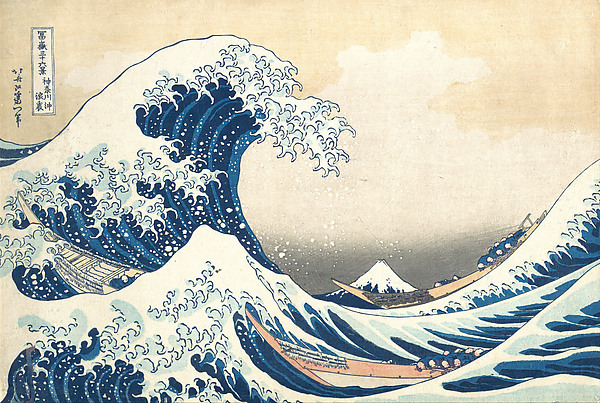
Under the Wave off Kanagawa (The Great Wave)
Katsushika Hokusai · 1831
Metropolitan Museum of Art, New York / Tokyo National Museum - Polychrome woodblock print (ink and color on paper)
Credit: Metropolitan Museum of Art, New York, NY - Katsushika Hokusai
Pine Trees (Shōrin-zu byōbu)
Hasegawa Tōhaku · 1595
Tokyo National Museum - Pair of six-panel folding screens, ink on paper (National Treasure)
Credit: Hasegawa Tōhaku (Wikimedia Commons)
Red and White Plum Blossoms
Ogata Kōrin · 1714
MOA Museum of Art, Atami - Pair of two-panel folding screens, ink, color, and gold leaf on paper (National Treasure)
Credit: Ogata Kōrin (Wikimedia Commons)
Kongōrikishi (Niō Guardians)
Unkei and Kaikei · 1203
Tōdai-ji Temple, Nara - Monumental carved cypress wood sculptures (National Treasure)
Night Rain at Karasaki
Utagawa Hiroshige · 1834
Art Institute of Chicago / Met Collection - Polychrome woodblock print
Credit: Art Institute of Chicago - Utagawa Hiroshige

Fun Facts

For centuries, Japanese painting and calligraphy prized the concept of 'ma' - the dynamic, meaningful negative space or pause that allows the viewer's imagination to complete the composition.
↗ Source: en.wikipedia.org
During the Edo period, ukiyo-e woodblock prints were originally considered inexpensive popular entertainment for urban commoners, yet when exported to Europe in the mid-19th century as wrapping paper for tea and ceramics, they radically transformed Western art.
↗ Source: en.wikipedia.org

Shop