
Description
The chart is an interactive lineage map. Japonisme sits at the center, on a timeline that runs from older movements at the top to newer ones at the bottom. The movements that influenced it appear above it, any parallel movements it developed alongside sit on its own row, and the movements it later influenced appear below. Every line is a real, cited connection between two movements: a solid line is an influence historians broadly agree on, and a dashed line is an indirect, parallel, or contested link.
For Japonisme (c. 1858 – 1900), it traces one movement that shaped it, a well-established link: Ukiyo-e; it runs alongside one parallel movement, a well-established link: Exoticism; it fans out to three movements it went on to influence, all well-established links: Art Nouveau, Cloisonnism and Impressionism.
Japonisme is a French term that refers to the popularity and influence of Japanese art and design among a number of Western European artists in the nineteenth century following the forced reopening of foreign trade with Japan in 1858. Japonisme was first described by French art critic and collector Philippe Burty in 1872.
While the effects of the trend were likely most pronounced in the visual arts, they extended to architecture, landscaping and gardening, and clothing. Even the performing arts were affected; Gilbert and Sullivan's The Mikado is perhaps the best example. Read more ↗
Key Artists
Famous Artworks


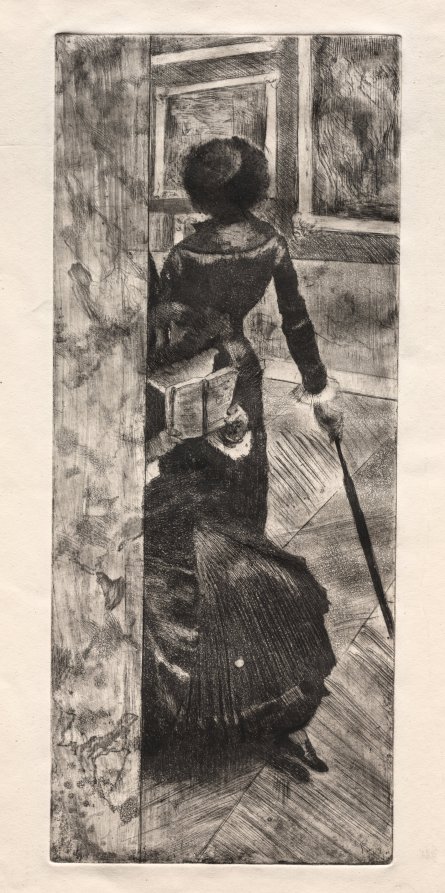
_-_s0116V1962_-_Van_Gogh_Museum.jpg)
