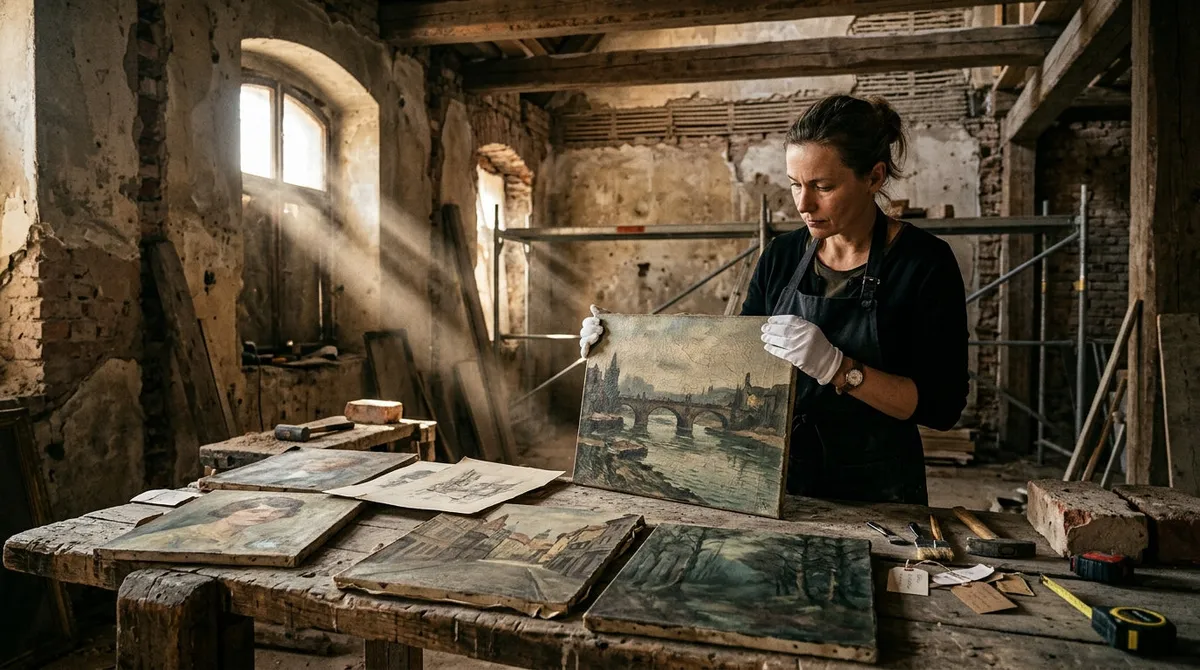
In the summer of 2018, demolition foreman Michal Ulvr drove a steel crowbar into the ceiling joists of a decrepit house in Zbraslav, a quiet suburb south of Prague. He braced for falling masonry, rotten lath, and pulverized mortar. Instead, about thirty unmounted oil canvases slipped from the dark overhead cavity and tumbled directly onto his head.
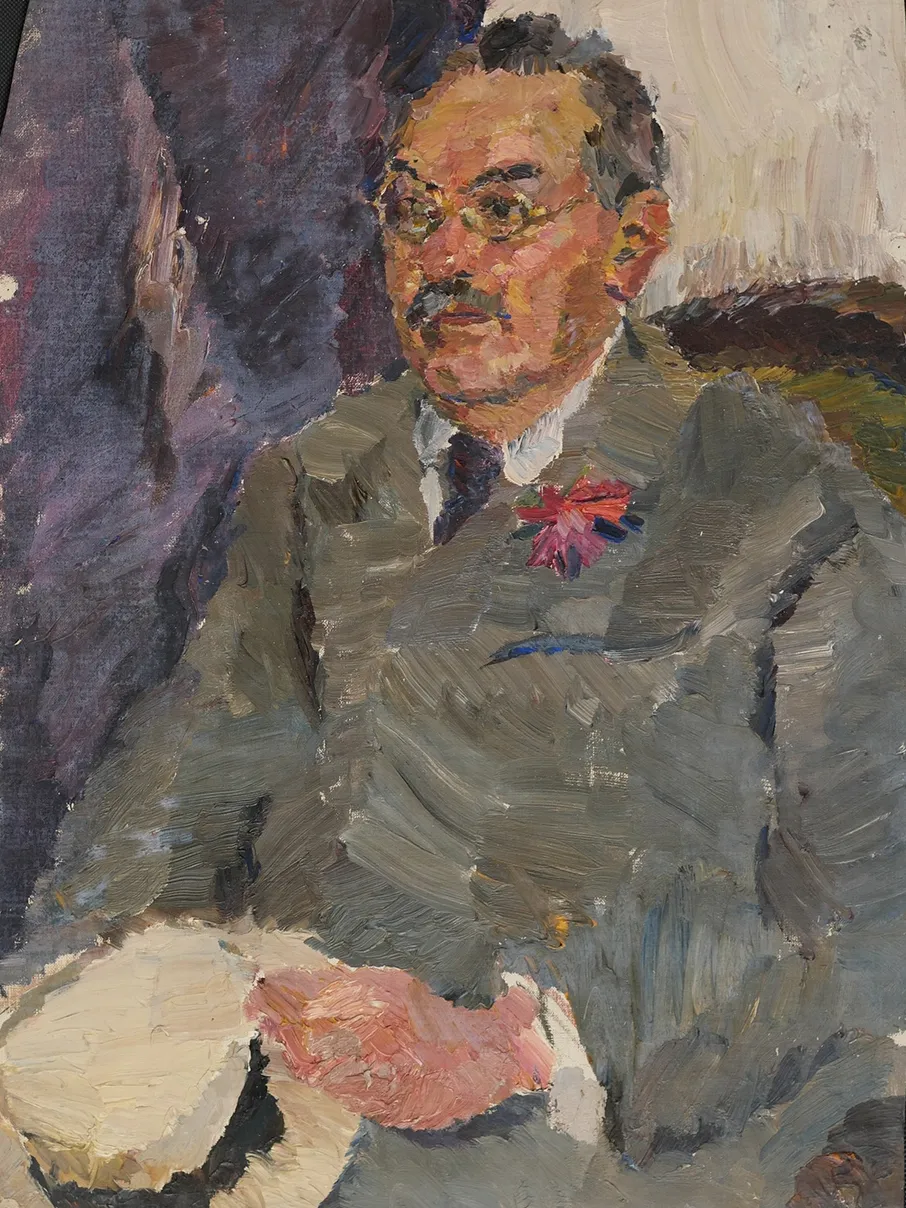
What Ulvr shook off was not building debris. It was the first glimpse of the Gertrud Kauders hidden paintings: roughly seven hundred canvases and drawings, unpinned from their frames and sealed behind plaster in 1939 to escape Nazi confiscation.
As the demolition crew picked through the dust, they realized the house was hollowed out with art. Canvases sat wedged behind wooden wall linings, laid flat between attic floorboards, and tucked into brick cavities beneath the roofline.
The Gertrud Kauders Hidden Paintings Inside Zbraslav's Walls
Property owner Jakub Sedláček had inherited the dilapidated house and hired Ulvr to clear the lot for a modern home. When Ulvr phoned him about the bundle of thirty paintings, Sedláček assumed it was a curious family heirloom left behind in the eaves.
As demolition continued, workers prying open second-floor partitions discovered hundreds more unmounted paintings, pastels, watercolor art sheets, and sketchbook folios. Some canvases had been rolled tightly; others lay stacked flat, insulated from moisture by layers of historic building paper and timber laths.
By the time the clearing finished, Sedláček had gathered roughly seven hundred individual artworks. Much like the discovery of Klimt's stolen portrait hidden in a museum wall decades later, the house had turned structural cavities into an accidental vault, spanning landscapes, quiet interiors, and expressive portraits signed with variations of a single name: Kauders.
The Erased Career of Gertrud Kauders
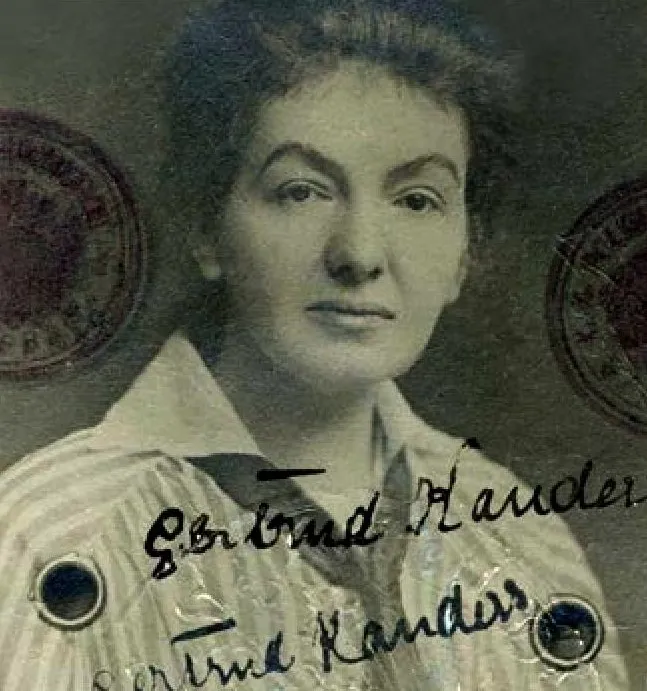
Gertrud Kauders was born in Prague on April 26, 1883, into a prominent, cultured Jewish family. Her father, Moritz Kauders, served as an imperial councillor, and her family moved in the city's intellectual circles.
At a time when European state academies routinely barred female students, Kauders fought for formal training. She studied painting in Munich and Paris before winning admission to the Prague Academy of Fine Arts under landscape master Otakar Nejedlý, whose open-air masterclasses shaped Bohemia's early modernist landscape tradition.
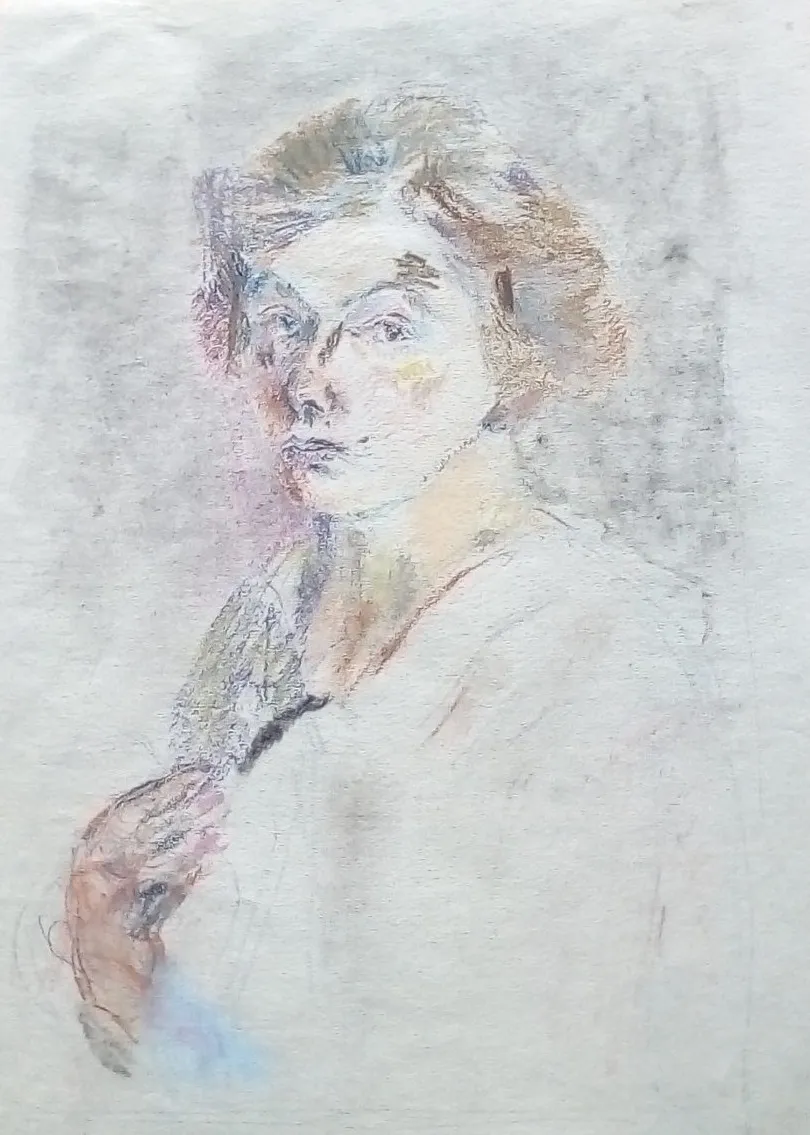
Throughout the 1920s and 1930s, Kauders exhibited with the Prager Secession and the Concordia artistic societies. Her work drew heavily on post-impressionism: fluid brushwork, luminous outdoor light, and striking, introspective portraiture that stood shoulder to shoulder with the finest central European classic art and studio canvases of the interwar era.
Then, in March 1939, Adolf Hitler's armies rolled into Prague, annexing the Czech lands as the Protectorate of Bohemia and Moravia. For Jewish artists across the country, public existence ended virtually overnight.
The Secret Pact with Natalie Jahůdková
Under Nazi racial laws, Jewish citizens faced systematic plunder, and modern art was routinely condemned as degenerate and seized for destruction. Kauders refused to let her lifetime of creative output be shredded by Nazi squads or dumped into gestapo storage crates.
She turned to her close friend and fellow artist, Natalie Jahůdková. Jahůdková, who was not Jewish, owned a house in Zbraslav, an outlying district along the Vltava river that offered distance from the heavy surveillance of central Prague.
Together, the two women devised an ambitious, painstaking operation: they unpinned roughly seven hundred canvases from their wooden stretchers, trimming excess canvas margins so the textiles could be packed into narrow voids without damaging the delicate paint layers, and carried the entire collection out to Zbraslav across multiple secret trips.
They embedded the art directly into the building's fabric. Every hollow joist, ceiling void, and subfloor partition became a vault.
Transport At to Transport Ay: May 1942
The hiding of the art was completed just in time. In the spring of 1942, Nazi authorities accelerated mass deportations from Prague.
Archival records from the Jewish Museum in Prague document Kauders's final days with chilling bureaucratic precision. On May 7, 1942, she was forced onto Transport At from Prague to the Theresienstadt (Terezín) ghetto camp. Just ten days later, on May 17, 1942, guards forced her onto Transport Ay, bound for the Majdanek extermination camp in occupied Poland.
She was murdered upon arrival. She was fifty-nine years old.
Natalie Jahůdková survived the war and continued living in the Zbraslav home for another thirty-two years. Yet she never removed the plaster or retrieved the paintings, carrying the secret through the post-war Czechoslovak republic and the deepest freezes of the Cold War until her death in 1977.
The Investigative Paper Trail and the Heirs
When the initial discovery occurred in 2018, local Czech news reported only that thirty unidentified paintings had been found during demolition. For two years, the remaining six hundred and seventy works remained stacked safely in Jakub Sedláček's storage.
In 2020, journalists Amos Chapple and Dana Katharina Vašková of Radio Free Europe / Radio Liberty began investigating the mystery. They visited Sedláček, who showed them the true scale of the archive: tables, shelves, and storage boxes overflowing with preserved canvases.
Working through archival registries, the journalists tracked down Kauders's surviving relatives in New Zealand. Her great-nephews, Tim During and Professor Simon During, a distinguished humanities scholar, were the grandchildren of Gertrud's brother, who had fled Czechoslovakia before the borders slammed shut.
Until the phone call from Prague, the During brothers had never seen Gertrud's art. They knew her only as a name on a tragic family tree.
Restitution and the Verdict of History
Unlike the decades of bitter litigation surrounding Nazi-looted masterpieces like Klimt's Woman in Gold, Sedláček immediately declared his intention to return every piece to Kauders's legal heirs without demanding salvage fees. He recognized that the canvases were not construction salvage, but the sacred legacy of a murdered woman.
The During family decided against commercial dispersal. Working with Michaela Sidenberg, chief curator of visual arts at the Jewish Museum in Prague, they donated approximately 380 major paintings to the museum's permanent collection, ensuring Kauders's vision returned to the city where she painted.
Additional works were gifted to the United States Holocaust Memorial Museum in Washington and the Museum of New Zealand Te Papa Tongarewa. Gertrud Kauders could not save herself from the camps; she saved her mind, her eyes, and her brush, outlasting the regime that tried to erase her.