In November 2026, an American museum wrote a check for $135,000 to buy an 1852 ceramic jug it already had in its possession. The Newark Museum of Art did not lose a lawsuit, face a subpoena, or yield to public protests. Instead, the museum's historic agreement with the descendants of enslaved potter David Drake quietly dismantled one of the most stubborn legal blind spots in American museum ethics.
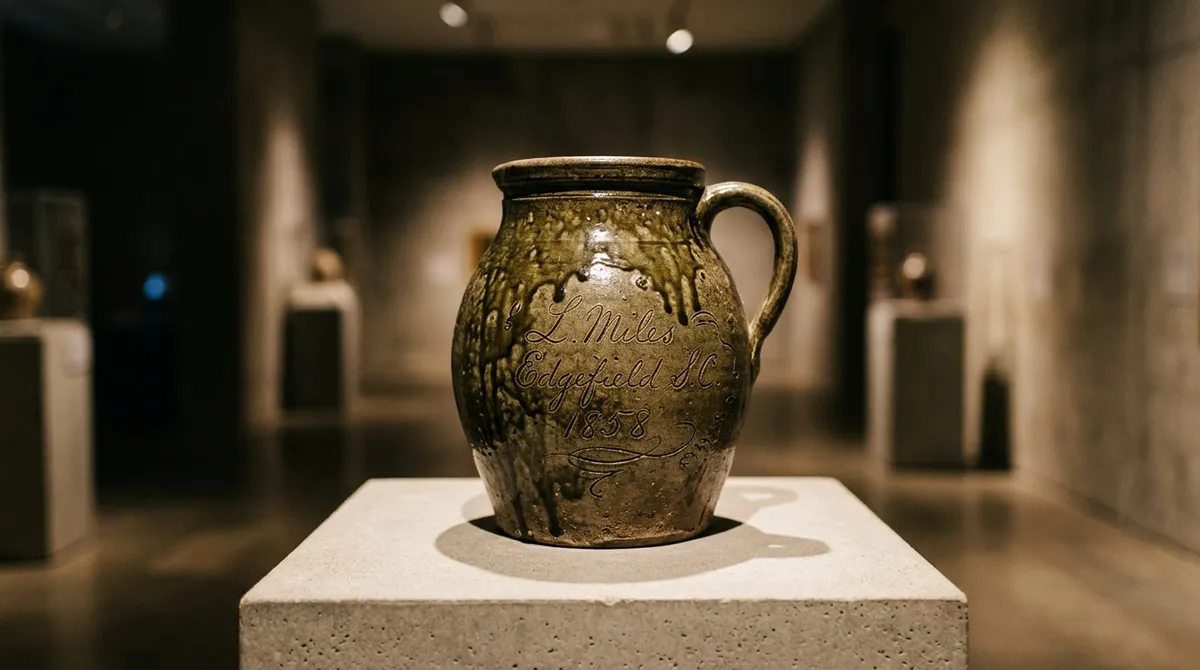
The vessel is a two-handled stoneware jug with an olive-brown alkaline glaze, standing roughly 14.5 inches tall. Created in Edgefield District, South Carolina, it bears the incised initials of factory owner Lewis Miles alongside the bold, cursive signature of the enslaved artisan David Drake (c. 1801 to the 1870s). For four years, it sat securely inside Newark's Seeing America: 18th and 19th Century galleries.
Yet on paper, its chain of custody harbored a profound moral defect. The museum owned the physical object, but it had acquired that ownership through an art market built on the total dispossession of enslaved creators.
The Forensic Dilemma: Who Owns Enslaved Genius?
When David Drake turned clay in antebellum South Carolina, state law classified him as chattel property. By legal extension, every vessel pulled from his kick wheel belonged entirely to his white enslavers. His labor generated immense agricultural and commercial wealth for regional plantations, yet Drake could legally claim neither wages nor copyright.
Over the next century and a half, Drake's work underwent a dramatic revaluation. Landmark institutional exhibitions, led by the Metropolitan Museum of Art exhibition Hear Me Now: The Black Potters of Old Edgefield, elevated Drake from regional folk curiosity to the canon of 19th-century American sculpture. His signed stoneware jars began commanding six-figure sums at prominent auction houses.
Private collectors and public institutions paid record prices to descendants of white slaveholders or secondary-market pickers. Meanwhile, Drake's direct descendants received nothing. The commercial market had simply financialized the fruits of forced labor a second time.
Incising Personhood: The Profile of David Drake in Wet Clay
At Lewis Miles's Stony Bluff manufactory in Edgefield, pottery was grueling industrial manufacturing rather than polite parlor craft. Enslaved potters dug heavy clay beds, chopped cordwood for massive wood-burning kilns, and endured choking smoke during multi-day firings.
Working with more than one hundred pounds of coarse, iron-heavy stoneware clay on a manual treadle wheel (a feat made even more demanding because Drake had lost his leg in an 1830s railroad accident), he threw towering storage vessels holding up to forty gallons, sealed their rims with two sturdy strap handles, and coated their surfaces in a runny wood-ash slip glaze. The sheer physical scale required monumental arm strength and surgical control. His massive, two-handled jars helped define a distinctly Southern tradition of utilitarian stoneware, establishing an enduring fascination with 19th-century ceramic patinas and early American material culture that still shapes contemporary appreciation for vintage art and historic craft traditions.
Yet Drake did something that risked his life. In 1834, South Carolina passed a severe Anti-Literacy Act, punishing anyone who taught an enslaved person to read or write with heavy fines and public whipping. An enslaved person caught writing faced fifty lashes in the public square.
Drake wrote anyway. Before his vessels entered the kiln, he took a wooden stylus and carved his signature ("Dave") into the damp clay alongside precise dates and original rhyming couplets. In couplets like "I made this jar for cash / though its called lucre trash," he openly mocked the economic hypocrisy of the slaveholders who profited from his genius.
Inscribing his name into the clay was a permanent declaration of personhood: a physical refusal to be reduced to the property of the men who bought and sold him.
The Paper Trail: Reconstructing the Title Transfer
Newark originally bought the 1852 jug at auction in 2022 to strengthen its presentation of antebellum labor. Rather than waiting for an external restitution claim, museum leadership decided to investigate their own collection. Led by Director and CEO Lisa Funderburke and Senior Director of Registration and Collections Management Amber Germano, staff initiated quiet outreach to Drake's living heirs over the summer of 2026.
Those descendants had organized under the Dave the Potter Legacy Trust LLC, represented by attorney George Fatheree. As documented by The Art Newspaper, both parties sidestepped the adversarial posture common in property disputes. They commissioned two independent appraisals that established an agreed fair market value of approximately $135,000.
Newark then took the unusual step of voluntarily relinquishing title, executing a formal deed of gift to the family trust before negotiating any purchase. Once the descendants held clear legal title, Newark immediately repurchased the vessel directly from the Trust using dedicated endowment resources: the Mr. and Mrs. William V. Griffin Fund and the Barbara Harrison Wescott Fund.
The transaction, reported in detail by Artforum, achieved what standard property law could not: it provided equitable compensation to the artist's heirs while preserving the masterwork for permanent public study.
Beyond NAGPRA: A Voluntary Model for Slavery Restitution
In standard museum governance, established statutory frameworks govern stolen heritage. The 1990 Native American Graves Protection and Repatriation Act (NAGPRA) provides a federal process for returning sacred cultural artifacts and ancestral remains. Similarly, the 1998 Washington Conference Principles offer an internationally recognized rubric for resolving Nazi-confiscated art.
For cultural heritage created under American chattel slavery, however, there is zero statutory mandate. No law compels a museum to compensate the descendants of an enslaved artisan whose labor was stolen. Major institutions across the country, including the Museum of Fine Arts, Boston, the High Museum in Atlanta, and the Virginia Museum of Fine Arts, have grappled with how to present these works without sanitizing their violent origins.
Newark’s model provides a practical blueprint. For Fatheree, the voluntary buyback represents genuine moral leadership that other institutions holding Drake's work should follow. For Funderburke, the agreement set a clear precedent: institutions can confront the historical exploitation behind their holdings through direct partnership rather than defensive silence.
For the family, keeping the vessel accessible to the public came first. As Yaba Baker, a great-great-great-great-grandson of Drake, explained, taking the pots out of public view would be a disservice to Dave's singular stature in Black history. Restitution did not require hiding the work in a private vault; it required recognizing its true heirs.
An Unbroken Provenance on Public View
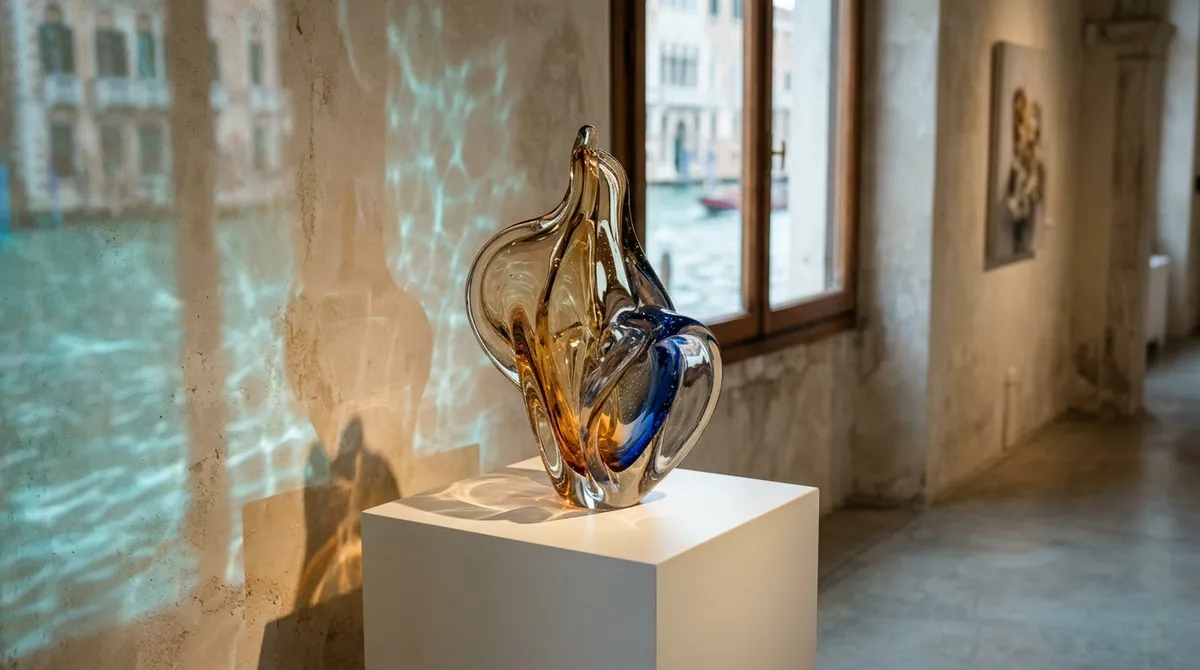
Inside the museum's galleries today, the 1852 jug sits on a simple plinth under focused conservation lighting. Visitors still pause to study the glossy olive glaze and the confident, looping cursive carved into its shoulder.
What changed is invisible to the casual eye, but monumental on the wall label. Beside the date and medium, the provenance ledger no longer ends with an anonymous auction gavel. It records a completed circuit: from an enslaved artisan’s hands, across a century of exclusion, through the legal hands of his living descendants, and back into public trust.
David Drake spent his life signing clay so the future could not deny his existence. In Newark, for the very first time, the legal deed finally matches the name on the pot.