Step across the stone threshold of Tate Britain into the quiet, diffused river light of the Linbury Galleries. Before you hang 300 objects spanning five decades of visual rebellion, assembled for the landmark survey Vanessa Bell & Duncan Grant: Inside Bloomsbury, running from November 12, 2026, through April 11, 2027. It is the first major institutional retrospective devoted to the couple since 1999, and it has dropped a lit match into the London art world.
Curated by Thomas Kennedy and Eliza Spindel, the exhibition was designed to reposition Vanessa Bell and Duncan Grant as pioneers who shattered Victorian domesticity. Instead, it triggered an immediate critical brawl. When The Guardian published its review, chief art critic Jonathan Jones did not mince words, calling the survey a "flaccid roam through Bloomsbury’s desperately mediocre modernists."
That clash sets the stakes for every step you take through these nine galleries. Is this visual legacy an exercise in polite bohemian amateurism, or did Bell and Grant stage a genuine revolution by bringing avant-garde painting off the easel and into daily life?
First Sightlines: Early Post-Impressionist Fire (1910–1914)
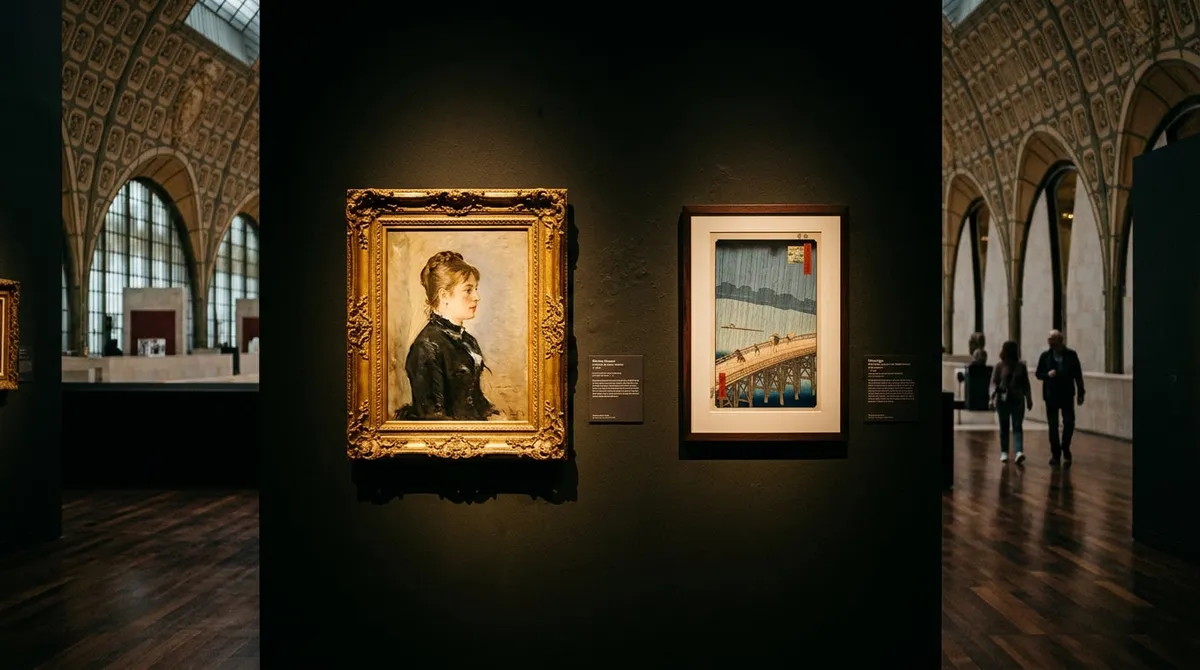
The opening gallery presents an uncompromising visual contrast. The entry wall gathers the dreary, soot-colored academic portraits that dominated British salons at the close of the Edwardian era. Turn your head ninety degrees, however, and those muddy earth tones are wiped away by pure cobalt blue, burning chrome yellow, and toxic emerald green.
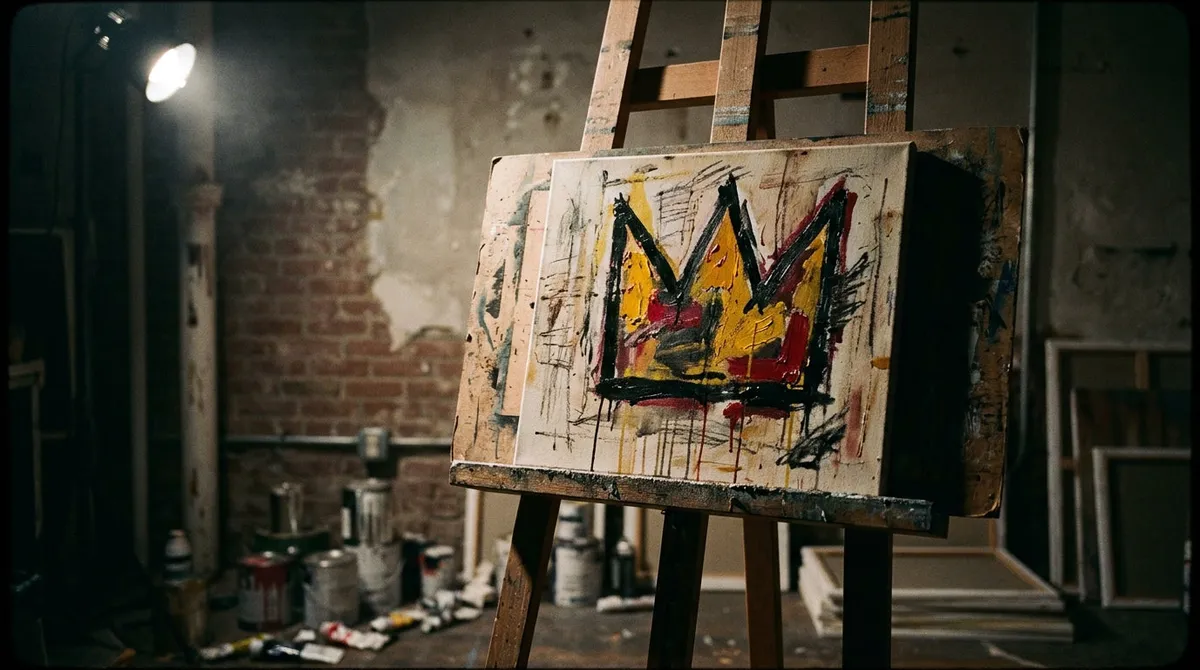
This chromatic shock records the earthquake of Roger Fry's 1910 Grafton Galleries exhibition, Manet and the Post-Impressionists. While conservative critics treated Vincent van Gogh and Paul Cézanne as dangerous madmen, Bell and Grant immediately abandoned their academic training. In this first room, you can see British art rewiring its visual instincts in real time.
Bell's 1914 abstract experiments command the center of the gallery. Her compositions balance floating geometric rectangles of ochre and lilac with a hard-won structural poise that rivalled contemporary Parisian studios. Beside her work, Grant's kinetic figurative studies pulse with physical rhythm, borrowing the electric motion of Diaghilev's Ballets Russes.
Their canvases proved that European modernism was not a foreign curiosity to be viewed from across the English Channel. For collectors of Post-Impressionist prints and paintings, that same restless energy remains unmistakable: visible brushmarks, raw pigment saturation, and an honest refusal to polish paint into a polite photographic surface.
The Charleston Sanctuary: Dissolving the Canvas into the Living Room
Passing deeper into the central galleries, the conventional white walls suddenly yield to the exhibition's curatorial coup. Kennedy and Spindel have reconstructed the full-scale working studio from Charleston, the Sussex farmhouse where Bell and Grant relocated during the First World War in 1916. Stepping inside this installation shifts your understanding of where an artwork begins and ends.
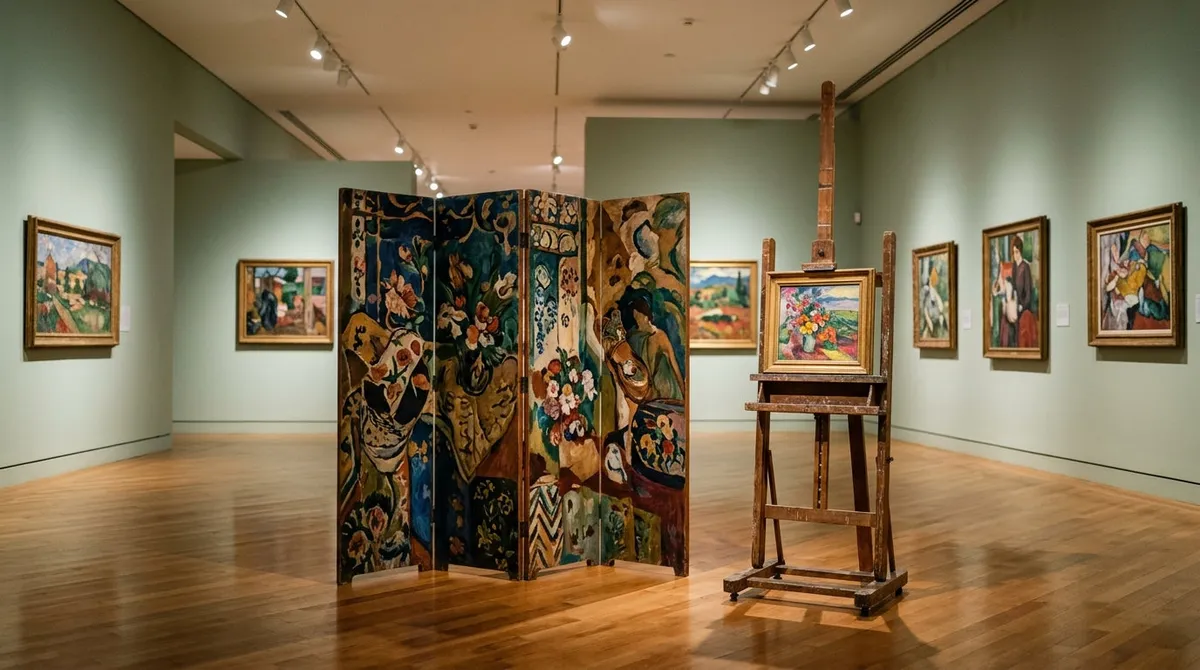
In this restaged studio, no domestic surface remained unpainted. Swirling decorative scrolls wrap around the fire surround, stylized dancing figures animate folding draught screens, and bold cross-hatching covers corner cupboards and earthenware jugs. Oil paint was not reserved for gold frames; it belonged on kitchen dressers, bed heads, and door panels.
This total decorative environment grew out of the Omega Workshops, established by Roger Fry in 1913 with Bell and Grant serving as co-directors. To destroy the capitalist cult of the celebrity artist, every textile, ceramic vase, and chair was sold unsigned, stamped only with the Greek letter Ω. The reconstructed studio demonstrates that Charleston was a living Gesamtkunstwerk, a shared domestic workshop where art and daily survival fused into one practice.
The definitive proof of this philosophy sits nearby in the display vitrines: their famous Famous Women Dinner Service, completed between 1932 and 1934. Commissioned by Kenneth Clark, the 50-piece ceramic dinner set depicts 34 notable women, from Sappho and Cleopatra to Jane Austen and Virginia Woolf. Created on humble commercial blanks, the service anticipated Judy Chicago's 1979 feminist installation The Dinner Party by more than four decades.
The Quiet Archive: Private Intimacies and Van Gogh's Mark
Beyond the theatrical color of the Charleston installation lies a quiet, dimly illuminated study gallery. Casual visitors often hurry past this room, but it holds some of the exhibition's most vital scholarship. Glass vitrines display personal letters, working sketchbooks, and fragile preparatory drawings that expose the private rhythm of their five-decade partnership.
The surrounding walls are hung with reciprocal portraits that capture their domestic working method. On one side, Bell depicts Grant bent over his palette; right beside it hangs Grant's canvas showing Bell painting from the opposite angle. There is no bravado or posturing here, only two working painters trading steady glances across a table cluttered with linseed jars and teacups.
This room also documents a significant art-historical revelation reported by The Art Newspaper: Bell and Grant's early, obsessive study of Vincent van Gogh. Long before the British establishment accepted Van Gogh as a master, Grant and Bell were copying his rapid reed-pen hatching and dense impasto into their private sketchbooks. Grant's small floral still lifes translate Van Gogh's urgent brushstrokes into oil, grounding continental passion inside English interiors.
Vanessa Bell and Duncan Grant at the Exit: Radical Domesticity or Desperate Mediocrity?
The final room expands into open space, leading toward the exit archways that look back out into Tate Britain's grand rotunda. Here, the critical storm ignited by Jonathan Jones's review in The Guardian demands an answer. Jones argued that when you strip away their aristocratic gossip and queer romantic tangled lives, their actual painting looks polite, provincial, and pale beside Henri Matisse or Pablo Picasso.
Yet that verdict judges Bell and Grant by the exact standard they spent their lives rejecting. If your metric of modern art is the heroic, monumental easel painting destined for a wealthy collector's boardroom, Bloomsbury will always look modest. Bell and Grant operated on an entirely different premise: they insisted that a hand-stenciled fire screen or a decorated dinner plate carried as much creative dignity as a framed canvas.
Before you step out onto Millbank and into the damp London air, turn back for one final view through the gallery sightlines. Under a soft directional spotlight, a painted wooden panel door from Charleston features Bell's sweeping ochre acanthus leaves. The pigment around the brass handle is worn down to bare timber where their fingers touched it every day for fifty years. That worn spot is the real argument of this show: they did not paint to impress posterity, they painted a world they could actually live in.