When an American museum accepts a 15 million dollar masterwork from the private bedroom of its former board president, how long is it required to keep it before calling an auctioneer?
Five years? A decade? A respectful generation?
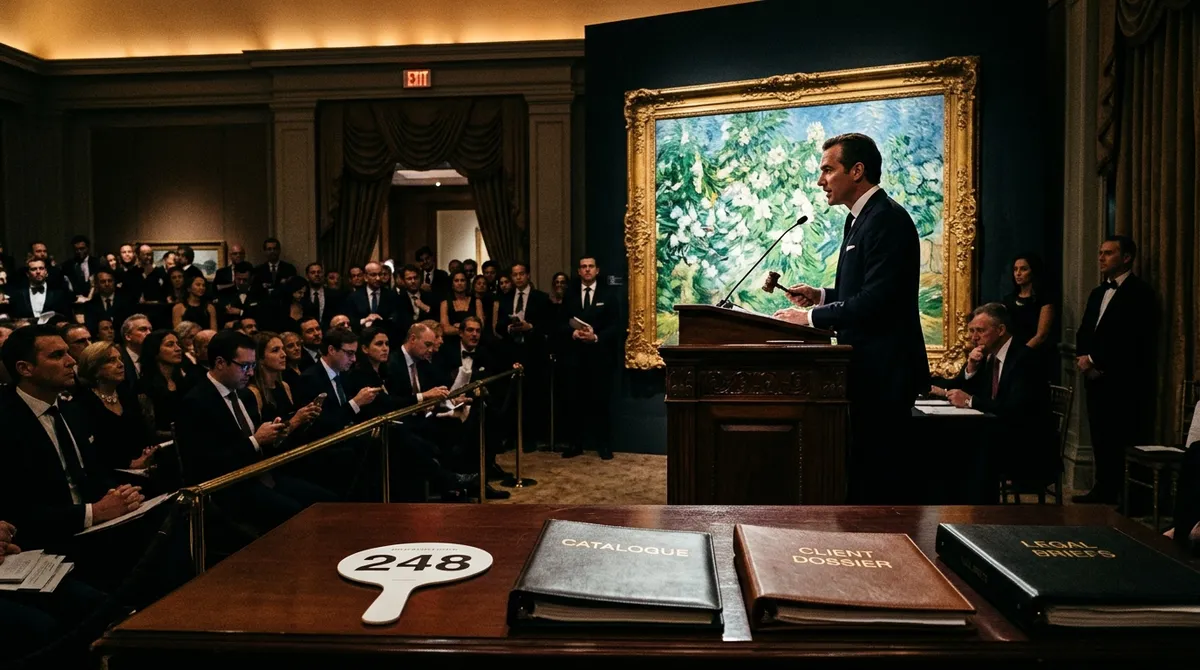
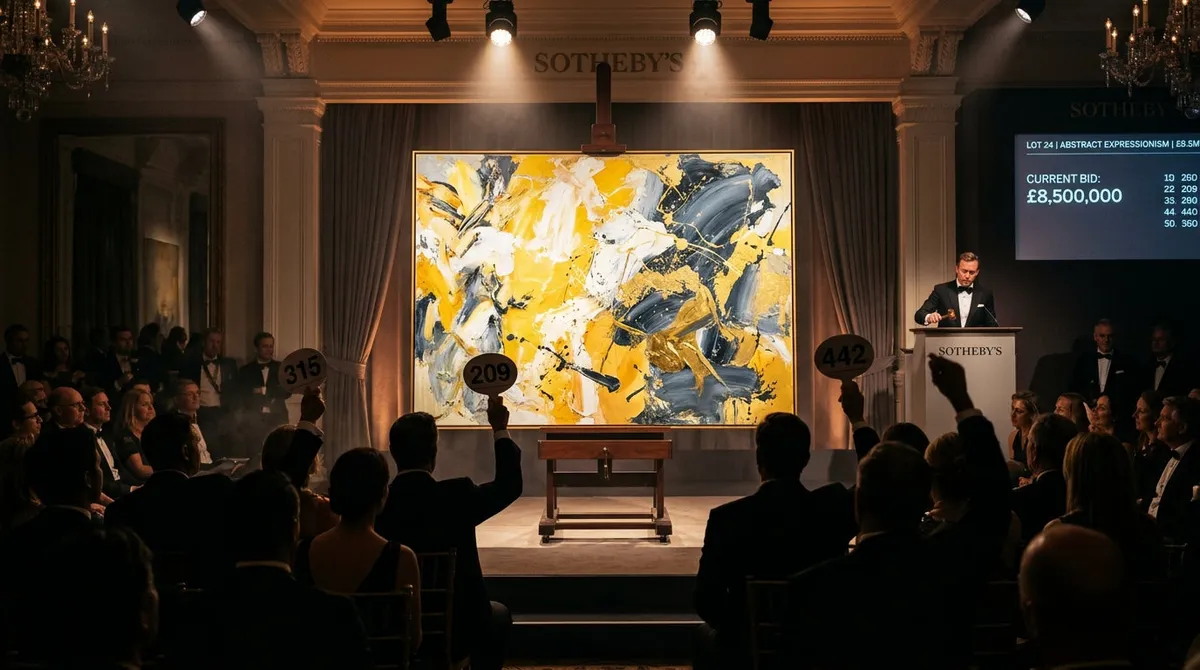
At the Whitney Museum of American Art, the timeline ran out in thirty-six months. On November 17, 2026, Christie's New York will offer Willem de Kooning's 1958 oil on canvas, Yellow River, during its 20th Century Evening Sale. Carrying an official pre-sale estimate of 12 million to 18 million dollars, the painting stands as a major milestone of post-war abstract expressionism.
Yet the consignor is not an embattled European collector facing tax liabilities. The seller is the Whitney itself, which formally completed accession of the canvas into its permanent collection in 2023.
The Institutional Defense vs. Art Market Reality
The Whitney's public explanation focuses entirely on future acquisitions. As reported by ARTnews, museum officials confirmed that every dollar from the hammer price will feed an endowment dedicated strictly to buying new works.
On paper, this maneuver satisfies the ethical codes of the Association of Art Museum Directors (AAMD). Those regulations prohibit museums from spending deaccessioning proceeds on operating deficits, staff payroll, or facility maintenance. Art must buy art.
That guideline was established to prevent regional museums from liquidating their heritage during budget crunches. It was never designed to serve as a legal shield for treating donated bequests like liquid securities on a secondary-market trading desk.
The Evidence on Canvas: de Kooning's 1958 Breakthrough
On the canvas itself, Yellow River documents a critical turning point in modern painting. Measuring 62 7/8 by 49 5/8 inches (159.7 by 126 cm), it captures de Kooning's transition away from the jagged, confrontational figures of his Women series into his celebrated late-1950s parkway landscapes.
During this period, de Kooning was regularly riding in cars between his Manhattan studio and Springs, Long Island. Watching through passenger windows, the physical world blurred into racing horizontal bands of telephone poles, green hedgerows, ocean horizon lines, and sunlit asphalt.
He turned to wide housepainter's brushes to capture that speed. Yellow River is constructed from sweeping, muscular bands of cadmium yellow, titanium white, zinc gray, and flesh pink applied in wet-on-wet ribbons.
That physical momentum reshaped modern painting, establishing the gestural, wide-brush language that still defines mid-century abstract wall art today. In Yellow River, de Kooning was not depicting a pastoral river; he was painting highway velocity.
The Paper Trail: How Willem de Kooning's Yellow River Reached the Block
The paper trail behind Yellow River reveals how deeply connected this canvas was to the Whitney's institutional history. The painting was purchased in October 1959 directly from the Sidney Janis Gallery by David M. Solinger (1906-1996).
Solinger was no ordinary collector. A prominent corporate and entertainment lawyer who negotiated historic broadcast agreements, he was elected president of the Whitney Museum in 1966, serving until 1974. He was the first board president who was not a direct descendant of the founding Whitney family.
Solinger guided the museum through its most ambitious expansion, overseeing the construction and opening of Marcel Breuer's granite building on Madison Avenue. For more than fifty years, Yellow River was not consigned to an airport freeport or corporate lobby; it hung directly at the foot of Solinger's bed in his Manhattan apartment.
In 2011, Solinger's family formalized a promised gift agreement with the Whitney, honoring his intention that his favorite canvas belong to the public. Following the passing of his widow, Betty Ann Besch Solinger, the museum completed the formal accession in 2023.
Three years later, the canvas was quietly transferred to Christie's.
The Redundancy Argument and the Permanent Collection
The Whitney's internal rationale for deaccessioning the painting turns on collection redundancy. Curators point out that the museum already holds significant examples from this exact chapter of de Kooning's career.
A search through the Whitney Museum permanent collection portal confirms that the museum owns de Kooning's monumental Door to the River (1960), along with landmark canvases like Woman and Bicycle (1952-53). From a strict collection-management perspective, Yellow River was deemed overlapping coverage of de Kooning's late-1950s landscape experiments.
Curators can reasonably argue that an eighteen million dollar windfall can fund dozens of acquisitions by historically marginalized and emerging contemporary artists. Yet monetizing a former president's personal gift sets an unsettling precedent for civic institutions.
When an accession committee converts a major bequest into cash almost immediately after taking possession, the social contract between museums and donors begins to fray. Future benefactors may think twice before deeding their most treasured pieces without binding legal covenants preventing future resale.
What Happens After the Hammer Falls
When the hammer falls at Christie's on November 17, Yellow River will almost certainly disappear into a private collection, a tax haven vault, or an overseas residence. The public will lose direct access to one of de Kooning's finest highway paintings.
The Whitney's acquisition fund will show an enviable balance, ready to finance new gallery acquisitions. Yet trading irreplaceable historical milestones for purchasing power remains a dangerous gamble for a public museum.
An institution that treats its permanent collection as an active trading portfolio may balance its acquisition books, but it risks eroding the public trust that made the collection possible in the first place.